.png)
Caring Zookeepers
Age: 2 years old
Class Size: 15 children
No. of Lesson: 4 classes in the whole course
Lesson Duration: 1 hour
Preparation
Part 1: Story Introduction and Vocabulary
Target Vocabulary:
- vet
- sick
- medicine
- thanks
- feel much better
Target Instruction:
- "What animal is sick/visits the vet?"
- "Yes/No: Does it feel good/better?"
Learning Objectives:
By the end of the lesson, students should be able to:
1. Understand and use the target vocabulary in context.
2. Answer simple yes/no questions related to the story.
3. Identify animals that may visit a vet based on the story context.
Materials List:
- "Zoo Vet" storybook or a similar story about animals visiHng a vet
- Animal flashcards, including animals that are featured in the story
- Toy stethoscope and other vet-related play items
### Class Details:
1. Warm-Up (5 mins): Start with a simple song or chant about animals to engage the children and introduce the theme of visiting a vet.
2. Story Introduction (5 mins): Introduce the story "Zoo Vet" to the children, showing them the book cover and pictures of animals that might visit a vet. Ask them predictive questions like, "What do you think a vet does?" and "Why would an animal visit a vet?"
3.Vocabulary Presentation (10 mins): Display the flashcards with the target vocabulary and images associated with them (e.g., a vet with a stethoscope, a sick animal, a bottle of medicine). Use gestures and facial expressions to convey meaning and encourage the children to repeat the words after you.
4. Interactive Reading (15 mins): Begin reading "Zoo Vet," pausing to point out when an animal is sick and when it visits the vet. Use the toy stethoscope to enhance the interaction, pretending to check the health of the animal in the story. After mentioning an animal getting medicine, ask, "Does it feel good/better?" to prompt a yes/no response.
Extension. Role Pay Activity (10 mins): Use toy animals and a toy vet kit to role-play scenarios from the story. Allow each child to be the vet and give 'medicine' to the sick animals. Reinforce the use of the target vocabulary, such as "The monkey is sick," and "The vet gives medicine."
Assessment:
- Listen for correct use of the target vocabulary during role play and discussion.
- Observe whether the children can answer yes/no questions appropriately.
- Evaluate the children's ability to identify and empathize with the sick animals in the story.
Remarks:
- Keep the mood light and fun; visiting a vet should not be seen as scary.
- Provide plenty of encouragement and praise for participation and correct use of vocabulary.
- Simplify the language as needed to ensure understanding.
Part 2: Art and Craft Activity
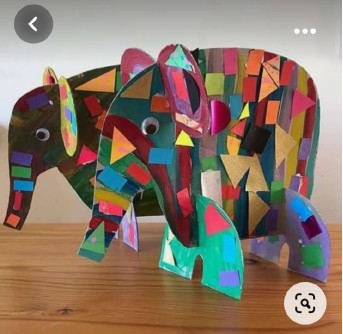
Making Collage Elephants from "Zoo Vet" Story
Learning Objectives:
By the end of this activity, students should be able to:
1. Use art materials to create a collage elephant related to the "Zoo Vet" story.
2. Continue developing fine motor skills through art-making, such as gluing and sHcking.
3. Recognize and recall the target vocabulary through association with the art project.
Materials List:
- Pre-cut elephant body shapes from construction paper or cardstock
- Coloured Tissue paper
- Glue sticks or white glue
- Googly eyes
- Additional decorative materials for details (ears and legs)
Class Details:
1. Introduction (5 mins): Introduce the art and craft activity, showing an example of a finished collage elephant. Explain to the students that they will create their own elephants, similar to the ones that might visit the vet in the story.
2. Creating Collage Elephants (20 mins): Provide each child with a pre-cut elephant body shape. Paint the elephant body. Demonstrate how to tear and stick coloured Tissue paper onto the elephant to create a collage pattern. Help them glue on googly eyes and add other details like ears and legs.
3. Vocabulary Reinforcement (10 mins): While the children are working on their elephants, reinforce the target vocabulary. For example, say "The elephant was sick, but the vet gave it medicine to feel much better," and ask related questions like "What animal is sick?" or "Does the elephant feel good/better now?"
4. Clean-Up (5 mins): Assist children with cleaning up their spaces, putting away materials, and washing hands.
Assessment:
- Observe if the children can follow instructions and use the target vocabulary.
- Assess their ability to use fine motor skills to complete the collage.
- Evaluate their engagement in the art activity and whether they can relate the craft to the story.
Notes for Teachers:
- Encourage the children to be imaginative with their collage patterns and to enjoy the creative process.
- Provide assistance with the glue and other materials as needed.
- Praise efforts and provide positive feedback to all children.
- Keep safety in mind, especially with smaller items like googly eyes.
- Ensure instructions are given clearly and step-by-step to keep all children on track.
Follow-Up:
- Display the children's collage elephants in the classroom.
- Encourage parents to talk about the story of "Zoo Vet" and the art activity to reinforce the lesson at home.
Image References for Art and Craft product: