.png)
Colourful Orchard
Age: 2 years old
Class Size: 15 children
No. of Lesson: 4 classes in the whole course
Lesson Duration: 1 hour
Preparation
1. Gather flashcards with images of the fruits: mango, lemon, watermelon, kiwi, coconut.
2. Prepare the book "Oliver's Fruit Salad" by Vivian French for reading.
3. Set up a sensory bin filled with safe, tactile representations of the fruits (either real fruits, plastic fruits, or textured materials).
Part 1: Story Introduction and Vocabulary
Target Vocabulary:
- mango
- lemon
- watermelon
- kiwi
- coconut
Target Instruction:
- "What colour is the [fruit]?" "The [fruit] is/are [colour]."
Learning Objectives:
By the end of the lesson, students should be able to:
1. Identify and name five different fruits.
2. Use colours to describe each fruit.
3. Engage with the story "Oliver's Fruit Salad" and relate it to the sensory experience.
Materials List:
- "Oliver's Fruit Salad" by Vivian French
- Flashcards depicting mango, lemon, watermelon, kiwi, coconut
- Sensory bin with tactile fruit representations
### Class Details:
1. Warm-Up (5 mins):
- Begin with a simple song or rhyme about fruits to get the children excited and to introduce
some of the vocabulary in a fun, engaging way.
2. Story Reading (5 mins):
- Read "Oliver's Fruit Salad" aloud to the children, showing pictures to engage them visually.
- Pause at each mention of the target fruits to point them out and encourage the children to
repeat the fruit names.
3. Vocabulary Game (10 mins):
- Use the flashcards to reinforce the fruit names and introduce the color of each fruit.
- Ask targeted questions like, "What colour is the mango?" and guide the children to respond, "The mango is yellow."
- This interactive game should involve showing the flashcard and perhaps picking the corresponding fruit from the sensory bin.
4. Interactive Fruit Exploration (10 mins):
- Allow the children to explore the sensory bin, handling the tactile representations of each fruit.
- Encourage them to describe the fruits using the new vocabulary words, focusing on colors and fruit names.
- This tactile activity will help solidify their understanding of the story and vocabulary by connecting these with real sensations.
Assessment:
Remarks:
Part 2: Art and Craft Activity
Making a Train Landscape
Learning Objectives:
By the end of this activity, students should be able to:
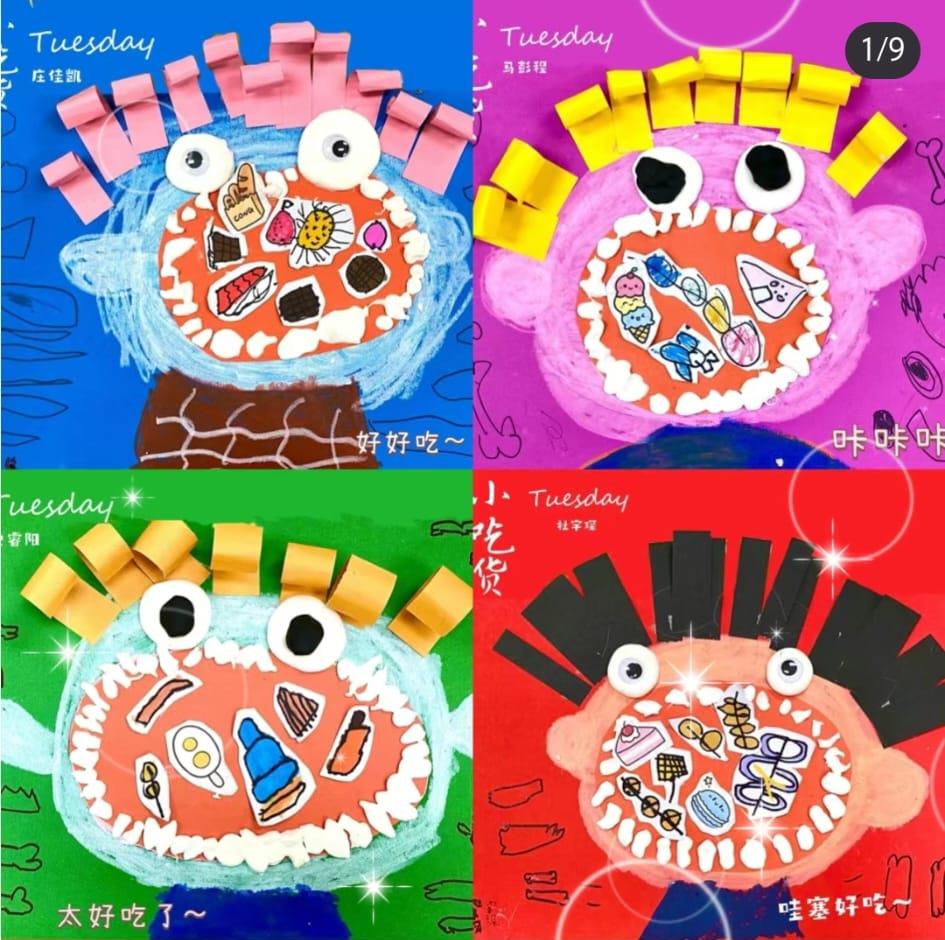
1. Use art materials to create a face collage incorporating fruits.
2. Develop fine motor skills through cutting, pasting, and arranging materials.
3. Identify fruits and their colors through hands-on art creation.
Materials List:
- Canvas or large paper for the background
- Paints (various colors)
- Markers or crayons
- Modeling clay (optional, for fruit creation)
- Cut-outs of fruits (mango, lemon, watermelon, kiwi, coconut) or magazines for collage
- Glue and child-safe scissors
- Additional decorative materials like glitter or stickers (optional)
Class Details:
1. Introduction (5 mins):
- Introduce the art activity by showing a sample painting or collage of a face with fruits in the mouth. Explain each material they will use and its purpose in the artwork.
2. Creating Fruit Faces (20 mins):
- Guide children as they paint or draw a large face on their canvas or paper. Help them think about where the mouth should be and how it can be filled with fruits.
- Once the face is drawn or painted, assist children in cutting out fruit shapes from provided materials or selecting pre-cut fruit shapes. Discuss the colors and names of each fruit as they work.
- Encourage children to glue the fruits onto the face in the mouth area, creating a fun and colorful collage. If using clay, they can model fruits and place them accordingly.
3. Detailing and Decoration (10 mins):
- Allow children to add details with markers, crayons, or additional decorative materials. They can draw eyes, nose, hair, or even use materials to create these features.
- Guide them in using different tools to make the artwork more detailed and personalized.
4. Clean-Up (5 mins):
- Help children clean their spaces, put away materials, and wash hands.
Assessment:
- Observe if the children can identify and name the fruits used in the collage.
- Assess their ability to use colors appropriately for each fruit.
- Check their ability to follow instructions during the art-making process.
- Evaluate their engagement and participation in the activity, noting their skill development in handling materials.
Notes for Teachers:
- Ensure all materials are safe and suitable for toddlers.
- Provide constant supervision, especially with scissors and glue.
- Encourage creativity and individual expression while guiding the activity.
- Praise each child’s effort to boost confidence and enjoyment.
Follow-Up:
- Display the children’s fruit face collages in the classroom to celebrate their work.
- Discuss the fruits and their colors again in subsequent lessons to reinforce vocabulary.
- Consider a fruit tasting session to connect the artistic activity with real-life experiences,
enhancing sensory learning.
Image References for Art and Craft product: