.png)
Taste Buds Adventure
Age: 2 years old
Class Size: 15 children
No. of Lesson: 4 classes in the whole course
Lesson Duration: 1 hour
Preparation
1. Obtain copies of "It Began with Lemonade" by Gideon Sterer, Lian Cho, avoiding the last part about Halloween as per the curriculum guidelines.
2. Prepare a variety of fruits that exemplify the target vocabulary: sweet, sour, juicy, crunchy, soft.
3. Set up a tasting station with small, child-safe plates and utensils.
Part 1: Story Introduction and Vocabulary
Target Vocabulary:
- sweet
- sour
- juicy
- crunchy
- soft
Target Instruction:
- "[Fruit] is [taste]."
- "What is your favourite fruit?"
Learning Objectives:
By the end of the lesson, students should be able to:
1. Identify and use new vocabulary related to taste and texture.
2. Express basic preferences in English.
3. Interact with a story by relating personal sensory experiences to it.
Materials List:
- "It Began with Lemonade" by Gideon Sterer, Lian Cho
- Assorted fruits (e.g., apples, oranges, bananas, grapes, lemons)
- Small plates and utensils for fruit tasting
### Class Details:
1. Warm-Up (5 mins):
- Begin with a simple greeting and a playful song about fruits to capture the children's attention and set a joyful tone for the lesson.
2. Story Introduction (10 mins):
- Introduce the book "It Began with Lemonade" and explain that it's a story about different fruits and their tastes.
- Show the illustrations to engage the children visually and ask predictive questions like, "What fruit do you think this is?" and "Do you think it will be sweet or sour?"
3. Vocabulary Exploration (10 mins):
- Present each fruit from the story, describing its taste using the target vocabulary. For example, "This lemon is sour."
- Let each child taste a small piece of fruit and use the sentence structure "[Fruit] is [taste]." Encourage them to describe what they taste.
4. Interactive Reading (10 mins):
- Start reading the story, pausing to let children identify and taste the fruits mentioned on each page.
- Use the target sentence "What is your favourite fruit?" periodically to encourage children to express their preferences and practice the new vocabulary.
Assessment:
- Observe if children can correctly use the target vocabulary to describe fruits.
- Check for understanding as children express their preferences using the target sentence structure.
- Monitor engagement and participation during the story and tasting activity.
Remarks:
Part 2: Art and Craft Activity
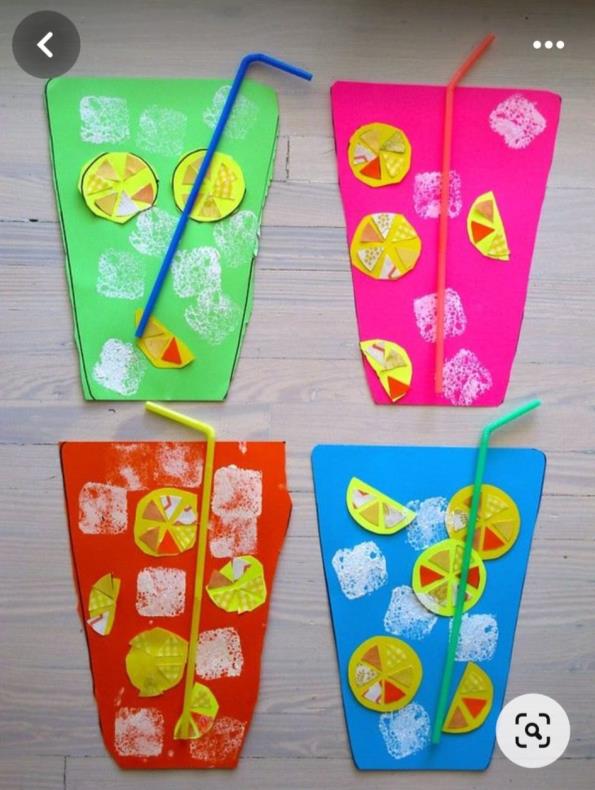
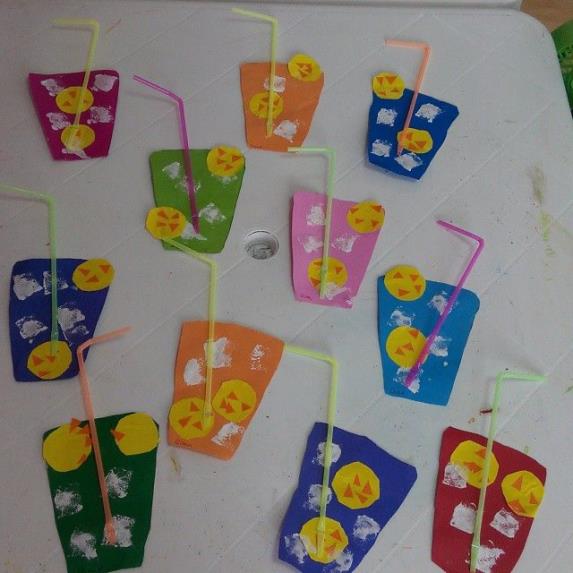
Making a Glass of Lemonade
Learning Objectives:
By the end of this activity, students should be able to:
1. Use art materials to create a themed craft that corresponds to the story read in Part 1.
2. Continue developing fine motor skills through cutting, gluing, and printing techniques.
3. Recognize and discuss the colors and shapes used in the craft.
Materials List:|
- Pre-cut trapezium colored paper to represent a tall glass
- White paint and various small objects for printmaking ice cubes (e.g., small blocks or
sponges)
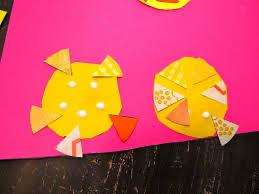
- Pre-cut yellow circles and semi-circles for lemons
- Colored paper in different shades of orange for lemon details
- Drinking straws to attach as part of the craft
- Glue
- Plastic plates for paint
Class Details:
1. Introduction (5 mins):
- Introduce the art activity by showing a completed sample of the lemonade glass craft.
- Discuss the shapes and colors that will be used, linking back to the sensory experiences from Part 1 of the lesson.
2. Making the Lemonade Glass (20 mins):
- Have the children glue the pre-cut trapezium paper onto a larger sheet to form the glass.
- Demonstrate how to use white paint and objects to make ice cube prints inside the glass.
- Guide children in arranging the pre-cut yellow circles and semi-circles on the glass to represent lemons. Assist them in adding different shades of orange paper to these circles to create a detailed lemon effect.
- Help children glue a straw to the side of the glass to complete their artwork.
3. Discussion and Vocabulary Reinforcement (5 mins):
- Engage the children in a discussion about their crafts, asking them to describe their lemonade using the vocabulary from Part 1 (e.g., "Is your lemonade sweet or sour?", "What color is your lemonade?").
- Reinforce the target sentences by having children say, "[My lemonade] is [taste/color]."
4. Clean-Up (5 mins):
- Guide children in cleaning their work areas and washing their hands.
- Organize the materials and prepare for displaying the artworks.
Assessment:
- Observe children’s ability to follow instructions and use the target vocabulary during the craft
activity.
- Evaluate their fine motor skills through their handling of cutting, gluing, and assembling.
- Monitor their engagement and participation in the discussion, noting their use of descriptive
words.
Notes for Teachers:
- Ensure all materials are safe and non-toxic, suitable for use with toddlers.
- Provide close supervision during the use of glue and during the printmaking process.
- Encourage creativity and individual expression in each child’s artwork.
- Use praise liberally to motivate and build confidence.
Follow-Up:
- Display the completed lemonade glasses in the classroom to celebrate the children's work.
- Encourage parents to engage in similar sensory and art activities at home, using the
vocabulary and techniques learned.
Image References for Art and Craft product: