.png)
Wheels on the Go
Age: 2 years old
Class Size: 15 children
No. of Lesson: 4 classes in the whole course
Lesson Duration: 1 hour
Preparation
1. Prepare flashcards featuring various vehicles such as a bus, car, bike, truck, and motorbike.
2. Arrange a set of toy vehicles or images that correspond to the target vocabulary for tactile learning.
3. Select a book or create a simple story that includes the target vocabulary and questions, such as "It's a Marmalade Jam".
Part 1: Story Introduction and Vocabulary
Target Vocabulary:
- bus
- car
- bike
- truck
- motorbike
Target Instruction:
- “How many wheels are there?”
- “What colour is the _______?”
Learning Objectives:
By the end of the lesson, students should be able to:
1. IdenHfy and name different types of vehicles.
2. Count the number of wheels on various vehicles.
3. Answer questions about the colour of each vehicle.
Materials List:
- Book or story "It's a Marmalade Jam"
- Flashcards with images of a bus, car, bike, truck, and motorbike
- Toy vehicles or images of vehicles
### Class Details:
1. Warm-Up (5 mins): Start with a song or rhyme about vehicles to get the children excited about the topic.
2. Vocabulary Introduction (10 mins): Show the flashcards and introduce each vehicle one by one. Encourage the children to repeat the names ager you.
3. Story Session (10 mins): Show the flashcards and introduce each vehicle one by one. Encourage the children to repeat the names ager you.
4.Question and Answer Activity (10 mins): Ager the story, ask the children the target questions about the vehicles in the story or on the flashcards. For example, “How many wheels are there on the bike?” and “What colour is the truck?”
Assessment:
Remarks:
Part 2: Art and Craft Activity
Making a Train Landscape
Learning Objectives:
By the end of this activity, students should be able to:
1. Recognize and understand the basic structure of different vehicles.
2. Use art materials to construct a simple vehicle model.
3. Develop fine motor skills through cutting, gluing, and assembling art materials.
Materials List:- Toilet rolls
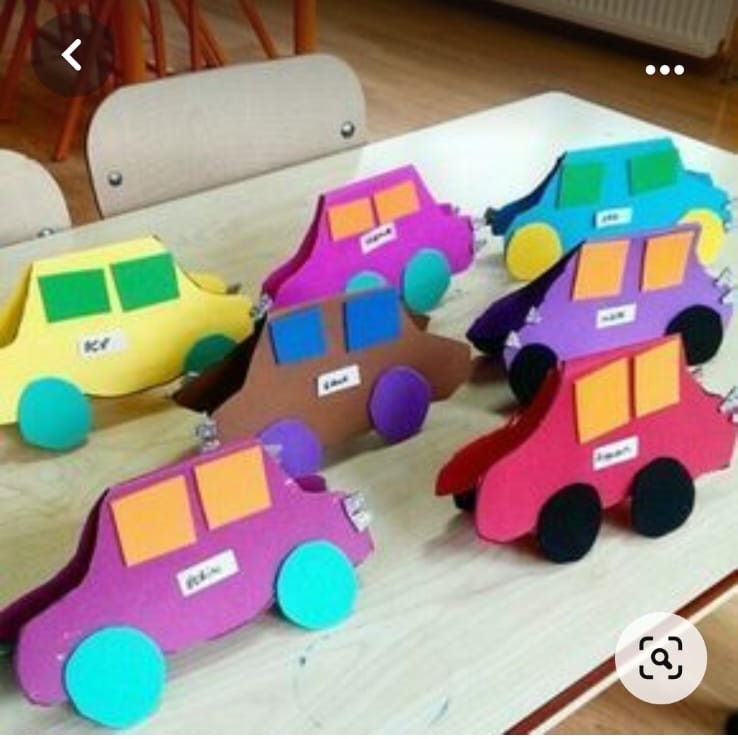
- Pre-cut and folded paper or cardstock for cars and buses
- Black paper circles for wheels
- Colourful rectangles for windows
- Aluminium foil cut into rectangles for headlights
- Glue, tape, and scissors (for teacher use or with close supervision)
Class Details:
1. Introduction (5 mins): Show the children a finished toy vehicle model and explain that they will be making their own. Discuss the parts of the vehicle they will be using, like the body, wheels, windows, and headlights.
2. Assembling the Vehicles (20 mins):Walk the children through the steps of creating
their vehicle. Start by decorating the pre-cut vehicle bodies with windows and headlights.
Then, help them attach the body to the toilet roll and adhere the wheels.
3. Personalizing the Toy Vehicle (10 mins): Allow the children to personalize their vehicles by choosing colours and adding additional decorations if desired. During this time, engage with them by asking the target questions about their vehicles.
4. Clean-Up (5 mins): Help the children clean up their work area, ensuring all materials are put away properly, any waste is disposed of, and that the children's hands are washed if necessary.
Assessment:
- Observe if the children are able to use the target vocabulary.
- Assess their ability to follow the target instructions during activities.
- Observe their ability to follow directions.
- Gauge their engagement and participation during the interactive storytelling session and whether they respond appropriately to the target questions.
- Evaluate their engagement in the art activity and their fine motor development.
Notes for Teachers:
- Encourage the children to participate in counting activities by making them fun and interactive.
- Be patient and provide assistance with counting and art activities as needed.
- Praise efforts and provide positive feedback.
- Use clear and simple language for instructions and questions.
- Ensure safety with art materials and provide close supervision.
Follow-Up:
- Display the children's polar home creations in the classroom.
- Encourage parents to bring children to take a train ride.
Image References for Art and Craft product: