.png)
Zoo Adventure Counting
Age: 2 years old
Class Size: 15 children
No. of Lesson: 4 classes in the whole course
Lesson Duration: 1 hour
Preparation
1. Prepare flashcards with images of five children doing various acDviDes such as walking,
reading a map, waving, taking photos, and holding hands.
2. Arrange for a large printed or digital image of a zoo map for a map-reading acDvity.
3. Select the book "Five Little Children at the Zoo" for the day's focus.
Part 1: Story Introduction and Vocabulary
Target Vocabulary:
- Walking
- Reading map
- Waving
- Taking photos
- Holding
Target Instruction:
- "How many children are there?"
- "What is the girl/boy doing?"
Learning Objectives:
By the end of the lesson, students should be able to:
1. Identify and use the target vocabulary words in context.
2. Respond to questions about the number of children and their activities.
3. Engage with the story "Five Little Children at the Zoo" and show understanding of the story elements.
Materials List:
- "Five Little Children at the Zoo" storybook
- Flashcards with target vocabulary
- Props or toys related to the zoo (optional)
### Class Details:
1. Warm-Up (5 mins): Start with a playful song or chant about the zoo to capture the children's attention and introduce the theme of the day.
2. Story Introduction (5 mins): Show the cover of "Five Little Children at the Zoo" and ask the children questions about what they see. Encourage them to count the children on the cover and discuss the activities they may be doing at the zoo.
3.Vocabulary Flashcards (10 mins): Introduce the target vocabulary with flashcards, demonstrating each action and encouraging the children to mimic it. For example, pretend to walk in place for "walking" or mimic holding a camera for "taking photos."
4. Storytelling with Actions (15 mins): Begin reading "Five Little Children at the Zoo" and pause to highlight the target vocabulary in context. Ask the children to perform the actions when the characters in the book do them, such as "Let's all wave like the children are waving at the monkeys!"
Assessment:
- Observe the children's participation in actions and their ability to mimic the target vocabulary.
- Listen for their responses to the target questions and assess their understanding of the story context.
- Monitor their engagement with the story and map-reading activity to evaluate their interest and comprehension.
Remarks:
This lesson plan is crafted to provide toddlers with a captivating introduction to the "Five Little Children at the Zoo" story. The hands-on vocabulary activities and interactive storytelling approach aim to build basic language skills, while the map-reading segment adds a layer of cognitive development. By participating in these activities, children will not only learn new English words but also practice counting and answering simple questions in a fun and supportive environment.
Part 2: Art and Craft Activity
Making a Train Landscape
Learning Objectives:
By the end of this activity, students should be able to:
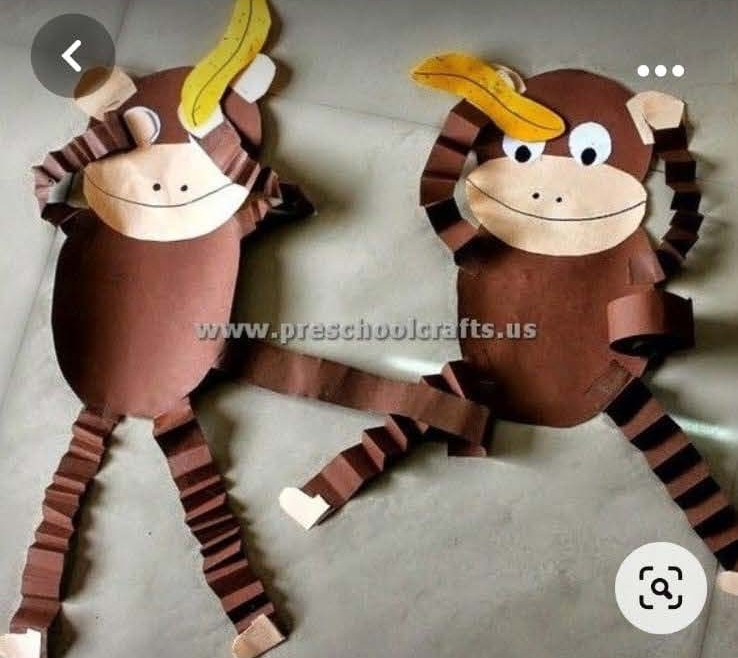
1. Use art materials to create a monkey based on the "Five Little Children at the Zoo" story.
2. Improve fine motor skills by cuing, folding, and gluing.
3. Identify and use basic shapes and colours in art-making.
Materials List:
- Brown construction paper (oval shapes for head and body, strips for limbs)
- Peach construction paper (oval shapes for snout, ears, hands, and feet)
- Google eyes or white paper circles and markers
- Glue sticks
- Scissors (for teacher use or with close supervision)
- Markers for drawing facial features
Class Details:
1. Introduction (5 mins): Show the children an example of the completed monkey artwork and explain that they will be making their own monkeys. Introduce the materials and describe each part of the monkey they will assemble.
2. Monkey Assembly (20 mins): Walk the children through the steps of making their monkeys. Start with the body and head, then move on to folding the strips of paper for arms and legs. Attach the snout, ears, hands, and feet. If using google eyes, help them stick these on; if not, show them how to draw eyes with markers. Finally, guide them in drawing the nose and mouth.
3. Counting Body Parts (10 mins): As they work, incorporate counting. Ask them to count
two ears, two eyes, one nose, one mouth, four strips for limbs, and one head and one body.
4. Clean-Up (5 mins): Help the children clean up their areas, put away leftover materials,
and wash their hands if necessary.
Assessment:
- Check if the children were able to follow the steps and create their monkey artwork.
- Observe their ability to count the body parts of the monkey correctly.
- Evaluate their fine motor skills as they fold, cut, and glue.
Notes for Teachers:
- Ensure the safety of the children by supervising the use of scissors and managing the use of glue.
- Encourage the children to express their creativity, allowing for variations in their artwork.
- Give clear, step-by-step instructions and demonstrate each step before having the children do it.
- Use the assembly of the monkey to reinforce the vocabulary and concepts from the story.
- Provide assistance to children who need help with folding or assembling parts.
Follow-Up:
- Display the children's monkey artwork in the classroom to create a "Zoo Wall."
- Encourage parents to talk with their children about the zoo and the animals they learned about.
- Plan the next lesson to include a review of the story and the artwork, possibly integrating a counting game involving the handcrafted monkeys.
Image References for Art and Craft product: